Selasa, 02 April 2013

Right Time Of Doing Sex


THE best time to surf the net is 4am, according to experts who tested broadband speeds.
And scientists who study our daily habits and body clocks reckon the hour of the day we do certain things can make a huge difference.
So if there’s a time for everything, when should we be doing what?

7AM EXERCISE TO FIGHT FLAB

As long as you don’t overdo it or have your breakfast first, the best time of day to exercise if you want to burn fat is between 6am and 8am.
Your blood sugar levels are lower and, with an empty stomach, you’ll burn more fat reserves. You’ll also kick-start your metabolism and work off more calories.

8AM HAVE SEX

Your energy and hormone levels are at their peak. And if you’re trying for a baby, a man’s sperm count is higher too.
So this is the right hour... but how many minutes should you spend on the job?
A US study found the best sex sessions were between seven and 13 minutes long, while experts at Brunel University say being too strenuous at this time of day could suppress your immune system.
So go easy!

8.30AM HAVE YOUR BREAKFAST

Your first meal of the day is the most important and should have been munched by 9am.
A Harvard University study shows an early morning breakfast will stop you loading up with more calories later in the day.
Matthew Edlund, author of The Body Clock Advantage, explains: “If you don’teat breakfast, your body thinks it’s in starvation mode, and you’ll eat more food later on.”

9AM-NOON GO UNDER THE KNIFE

If you need an operation, try to get to theatre first thing in the morning. A US study of 90,000 operations found that “adverse events” were least common in the mornings andmost likely to happen between 3pm and 4pm. Mornings are also a good time to have injections as our hormones that deal with pain are at their peak.

11AM DO MENTAL CHALLENGES

This is a great time to do mental tasks like puzzles or sort out a work problem.
At this time of day you’re alert, your body temperature is rising and your brain can process information most efficiently. It’s an ideal time to brainstorm in the office – or put your feet up and do a Sudoku at home.

11.37AM HAVE A HEALTHY SNACK

This is the time when you are most likely to suffer a morning slump... and reach for a cuppa and a Kit Kat.
But you could have a cereal bar instead of chocolate – they typically contain half the calories and release their energy more slowly to stop you being tempted to start snacking again before lunch.

11.59AM MAKE YOUR MIND UP

The morning rush is over, you’ve beaten the mid-morning slump and lunch hunger pangs are yet to kick in and distract you. In a recent survey Brits said this was the best time of day to make an important decision – while 10pm is the worst.
By then your brain is frazzled from work and your body wants to go to bed. Only 1% of people believe they are able to make a life-changing decision at night.

1.30-2.30PM TAKE A NAP

Doctors used to think afternoon sleepiness was the result of a big lunch – but now they know that in early afternoon our body temperatures dip, making us feel drowsy.
Just as a similar decrease encourages you to shut down at bedtime, this midday dip can make you crave a snooze.
But an ideal nap should last 15 to 20 minutes. More than 30 and you may feel even more groggy when you wake up.

2PM HAVE A FACIAL..OR A FILLING

This is the perfect time of day to go for a beauty treatment because moisture levels in your skin are at their highest. But it’s also a good time to visit the dentist as a local anaesthetic lasts longer when given at this time.

2.16PM GRAB A COFFEE

Scientists say this is the time your energy levels hit rock bottom and your metabolism starts to wind down. Caffeine should perk you up.

5PM GET OUT OF PUFF

This is the best time to do cardio-vascular exercise. Your lungs use oxygen more efficiently, you’re more co-ordinated and your muscles are warmed up, so you’re less likely to suffer a strain.

7PM ASK SOMEONE OUT FOR A DRINK

Research shows you’re at your most happy, relaxed and sociable at 7pm – making it the perfect time for a date. And between 7pm and 8pm your liver is working at optimum level... meaning you process alcohol most effectively.

8PM POST ON FACEBOOK

You’ll get more “likes” than at any other time. Friends will be home from work, will have had dinner and be more likely to turn to Facebook.

8.30PM TAKE THE DOG FOR A WALK

This is more about Rover’s needs than yours.
Dog expert Jean Donaldson says owners take longer over their evening walks – and let their dogs linger over exciting smells and sounds missed on the morning rush-hour walk.

9PM COME DINE WITH ME

Your sense of taste and smell are at their sharpest – perfect if you want a meal out.
You might want to share it with a friend to fend off depression as studies show you’re at your loneliest between 8pm and 10pm... probably when that drink date has left.

10PM SWOT FOR YOUR EXAMS

Your long-term retention of information is at its sharpest so this is the best time for studying.
Memory depends on nucleic acid levels, which peak around 10pm. But morning is best for a quick pre-test brush-up.

11PM-7AM SLEEP

We should aim to get seven to eight hours’ sleep a night.
Dr Jason Ellis, director of Northumbria Sleep Centre, says: “11pm to 7am would be an optimal time for most people.”
But you should definitely try to be kipping between 3am and 4am when mental performance is low.
Accidents among night workers increase fivefold at this time.

3AM GO ON A GHOST HUNT

It used to be called the “witching hour” but now it’s known as “dead time”.
Experts in the paranormal say that there are more apparitions, ghostly goings-on and things going bump in the night at this time.

Katrina Kaif Unseen Hot Video


Katrina Kaif Unseen Hot Video

Britney Spears Nip Slip Bikini Pictures In Miami


Minggu, 10 Februari 2013

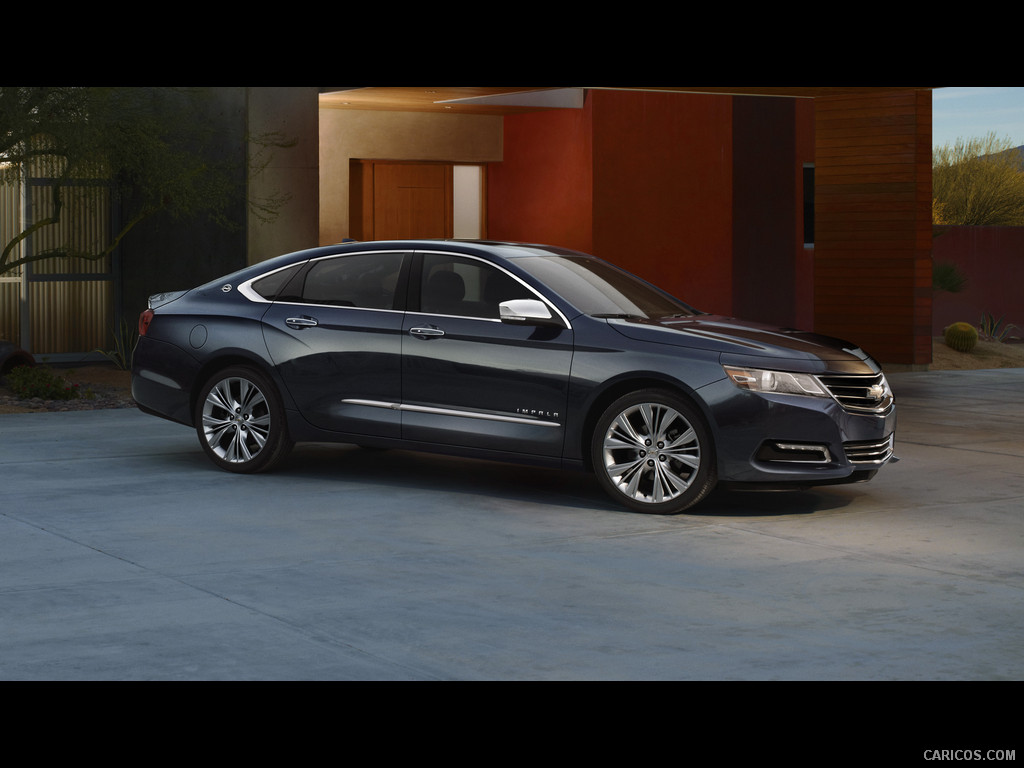
Oldest Nameplates still in production part II: Chevrolet Impala

This article is a followup to
http://boyracer.blogspot.in/2013/01/oldest-nameplates-still-in-production.html

Few models have a major hand in deifining the North American Automobile industry like the Chevrolet Impala. Identified by its triple symmetrical tail lights, the car has become a best seller for GM raking in the much needed money over the years. But unlike other nameplates still in production, this car has not had a constant run thanks to top management reshuffles and product lineup goofups.

Impala: An Impala is a medium-sized African Antelope.


First generation (1957-1958)

The Impala was manufactured in 1957 as a top of the line full-size economy cars alongwith Belair. The car had many distinguishing design features compared to other chevy's such as the tailfins at the rear and the triple symmetrical tail lights. This car was available in a 2-door convertible and 2-door hardtop version with a 3.0L I6, 4.6L v8 and a 5.7L V8 engines. The cars also had the cross flagged insignias now only found on the Corvettes. This car had a major hand in helping GM retain the no.1 spot as worlds largest car maker.


Second Generation (1958-1960)
The early years in car industry did not see a new generation car every year. But after the success of First Imapala and the feedback received by the company, the second generation came out in 1958. The car was heavily reworked and the chassis and bodywork was shared with entry level Buicks and Pontiacs. The tailfins at the tail were more pronounced but the triple taillights were given a miss but returned in the 1960 model. The second generation was basically hurried to give Impala a brand in itself instead of being sold as Belair. The 1959 car also had a distinct nostril design between the headlights and the Bonnet which was removed in the 1960 design. The cars sported a a new 3.9L I6 but retained the 4.6L v8 and 5.7L v8 engines.


Third Generation (1960-1964)

With the onset of the 70's the cars were losing their angles and becoming more boxy when it came to looks. The tailfins of the Impala were lost in the Third generation. The Tapered B-pillar design continued. A special edition Impala with bubble glass roof  (streching from Windshield to Boot) was launched. Engine options included a 3.8L I6, 4.6L V8, 5.4L V8, 6.7L V8 and a 7.0L V8.


Fourth Generation (1964-1970)

The fourth Generation Impala continued to be more subtle and simpler and more boxy.  The Impala was at the time one of the largest selling cars in the U.S. alongwith the likes of Ford Mustang. To cater to the demand, the Chevrolet Impala was made across 12 plants in the U.S. and Canada. In total, the fourth Generation Impala helped cement its place in the world as the fourth largest selling car in the world.  Ten engine options were on offer. 4.1L I6, 4.6L V8, 5.0L V8, 5.4L V8, 5.7L V8, 6.5L V8, 6.6L V8, 6.7L V8, 7.0L V8 and 7.4L V8.


Fifth Generation (1971-1976)

The sales success of the Chevrolet Impala continued through the early 70's. Various bodystyles were launched by Chevrolet to sustain sales such as a fastback version (aka Mustang), a bubbletop roof version and stations Wagons. The fifth generation Impala designs were streamlined in general and engine choices were also brought down to 5. A 4.1L I6, 5.7V8, 6.6L V8 turbo, 6.6L V8 NA, and 7.4L V8 options.


Sixth Generation (1976-1985)

The Sixth Generation marked the end of the beautiful American cars and the onset of wierd designs. The boxy muscle car designs were gone. Also gone were the big sized cars. The new Impalas were considerably smaller than previous versions thanks to the increased Japanese Invasion. Fortunately, the car still ruled as one of the largest selling cars in the North American market. While bodystyles decreased, engine options increased to 6. A 3.6L V6 replaced the old gen I6 engine along with a 4.1L V6. A diesel V8 engine was also added to the lineup.


Seventh Generation (1994-1996)

The big American Carmakers had started bowing down to the Japanese onslaught in the Automobile sector. The seventh generation Impala was smaller than before and the classic styling cues were absent too. This was also the last time the older Impala platform was used which was in continuous production since 1959. The sport tuned suspension and the black hues was a huge hit amongst the cops. Only one engine was offered, a 5.7L V8 and only a 4 door sedan bodystyle was offered. Increased competition and reliablity killed the Impala name in 1996. The triple ring tail lights was gone too.


Eighth Generation (1999-2005)

With the last of the old school Impala production ending, The fortunes at General Motors had also turned. Fighting with the Japanese onslaught, even American cars were becoming a me too design tough to distinguish in the market. Finally, a revision program brought back the Eighth Generation Impala in 1999. The Impala again provided a much needed boost in sales for GM being the largest selling cab car in the North America. The new Impala was a Front wheel drive car with only a 3.4L V6 and 3.8L V6 options available. The circular tailights and the running impala logo had returned on the car.


Ninth Generation ( 2005-2013)

In an attempt to win back marketshare and money, GM did a half hearted redesign of the Eighth Generation Impala. The ringed tail lights were lost but the running Impala logo was retained until 2008. A 3.5L V6, 3.6L V6, 3.9L V6 and a 5.3L v8 engine were offered. Also new on this car was a 6-speed automatic. Various minor refreshes continued over the 8 years trying to arrest falling sales for an outdated car with low fuel efficiency.


Tenth Generation (2013- Present)

Post Bankruptcy, GM adopted a new design philosophy. The Tenth Generation Impala received modern design cues on the lines of the 70's muscle car designs. The larger size of the sedan has been restored. Only a 4-door sedan version will be offered. Also new for the tenth generation Impala are the smaller 2.4L I4, 2.5L I4 and 3.6L V6 engines. The ringed tail lights have been deleted but the running Impala on the C-pillar has been retained.


Minggu, 27 Januari 2013

Oldest Nameplates still in production part I : Rolls Royce Phantom

Using a good selling name plate has been a used and used again formula by marketers world over. Not only in the automobile industry but also other segments. When a product is successful using the same name to cross sell or upsell is the usual mantra. It should not come as a surprise then if some of the oldest name plates still in production in the world are more than 80 years old. One such name plate is the Rolls Royce Phantom.


Phantom I  (1925-1931)

Every Phantom today is hand-built at the Home of Rolls-Royce at Goodwood in England. From seamstresses to surface finish technicians and French polishers, it takes 60 pairs of hands to design, craft and construct a Rolls-Royce before it's ready for its owner. Now if the same process made all the Rolls Royce phantom, the history dates back to 1925. The year when the Phantom I was manufactured. When the time came to replace the premium car Rolls Royce Silver Ghost, Rolls Royce came up with Phantom I. The manufacturer from Manchester gave the Phantom I a bigger engine and overhead valves. Being the second 40/50 hp model Rolls Royce had to differentiate the two models from old Silver Ghost and hence the Phantom I was born . The 7668cc engines came with either 3 or 4 speed gearboxes based on either they were sold in the US or the UK. Also while the fuel guage on UK models was on the tank, the US cars had it on the dash.


Phantom II (1929-1936)

The last of the 40/50 hp models from Rolls Royce, the Phantom II is undoubtedly the best looking car in the lineup ever made. The new chassis had shorter wheelbase and stiffer springs for better overall ride and handling performance. The same 7668 Inline 6-cylinder engine did duty on this car as the previous version. A shorter wheelbase but tuned Phantom Continental was also built. The iconic shape has also landed the car in films such as 'The sorcerer's apprentice' where it is the sorcere's (Nicholas Cage) car and ' Indiana Jones and the last crusade'.


Phantom III ( 1936-1939)

The last version of the Rolls Royce built before the resources were dedicated to the war.  The car had the only V12 engine in any Rolls Royce until Rolls Royce put in another v12 in 1998. Although car chassis production was stopped in 1939, the last car was made in 1947. A total of 727 cars were manufactured, many of which survive to this day.


Phantom IV (1950-1956)

The fourth generation of Phantom is notable for two major reasons. Firstly, it was the first Rolls Royce Phantom to be built after the World War II where most of the company resources were diverted. Secondly, very few cars were made and only for the rich and elite. Only 18 cars were produced over a span of 6 years which brings the number to 3 cars per year. Surprisingly, 16 of these cars have survived. The fact is ironic considering Rolls Royce had initially intended to discontinue the Phantom line after the world war II. The car had an inline 8 cylinder engine with a 5700 cubit capacity.


Phantom V

516 units of the Phantom V were built from 1959 to 1963. The car had a 6230cc V8 engine. The gearbox for the car was borrowed from General Motors. The heaviest of all the phantoms, very few examples of this car exist. The most famous of the Phantom V's was owned by the John Lennon of the Beatles fame.


Phantom VI

374 units of the Phantom VI were built between  1968 and 1990. The sixth generation was also in production for the longest time of all phantoms totalling 21 years. Two engines were installed on this car, A 6.2 litre v8 and a 6.75 litre v8.More Phantom VI were also built as late as 1995 till 1997 for the sultan of Brunei. THis was the last car manufactured before the BMW era of Rolls Royce began.


Phantom VII

The first Phantom built under BMW ownership was the Phantom VII. The car is still in production from 2003.  The BMW era Phantom is also the first Phantom to not have a 4 speed gearbox but a hi-tech 6 speed automatic and 8 speed zf sourced automatic boxes. The engine is a 6.75 litre v12. The car is available in 44000 paint shades. Also it is ithe only car in the world to provide a power reserve indicator akin to an Automatic watch. A record 1000+ phantom Vii units were sold in 2007. A 2013 version has been launched by Rolls Royce as Series II with major updates.


Minggu, 06 Januari 2013

Normal 87 Octane vs. Premium 91 Octane. Which petrol?

Since the time premium fuels have entered the market, Consumers have had to deal with more than just confusion and misconceptions. Some said, low octane gives same performance as high octane while some said high octane gives you more power and mileage.

So, what needs to go in your car? In one word, 87 Octane if you drive from home to office in a regular car.
That's not to say that 91 Octane doesn't serve its purpose.

At the time of writing this article, fuel prices in India have reduced by 90 paise.  The current prices stand as mentioned below.

87 Octane - INR 72.16 per liter ( 4.92 USD per gallon)
91 Octane - INR 81.57 per liter ( 5.59 USD per gallon)

Even if you are sure premium fuel helps in increasing the efficiency, it has to be atleast 15% more to justify the higher fuel price. But here are some facts you need to know.


1. Read the manual: Cars and bikes today are compatible to a variety of fuels. To cater to various engines gas companies have also taken the extra step and now we have fuels ranging from E85( Ethanol) to regular 87 Octane all the way till 97 Octane. Yes, it's true that some high-end cars like Ferrari and Bentley's run only on 97 Octane but running your cars on such fuels will not make your cars go faster; your wallets might be lighter though. Ferrari's and Bentleys can run on normal petrol too if the company programs the ecu's to let them. All it will do is reduce the Horsepower numbers which they so bravely boast.

When in doubt stick to the manual. The manual on my Mitsubishi Lancer suggests atleast 87 Octane while the manual for Honda Fit/ Jazz and Royal Enfield Suggest to use 91 Octane petrol or higher. If you are not sure what to use, stick to what is recommended. I fill premium petrol when any of my car is to go through heavy stress (extreme stop and go traffic for 10+ kms or hill climbs).

PS: Most Premium fuels are just regular fuels mixed with Octane boosters. You can fill regular fuel and go for Octane boosters for much lesser money.


2. Your ECU knows: Almost all new cars of today have emission sensors fitted. These sensors have the ability to detect what petrol is being used and tune the engine accordingly. So irrespective of which fuel you use, your car will make the best use of that fuel. If it is 87 Octane the car will lower the compression and if the fuel is 91, it will burn the fuel completely.

PS: Higher Octane count doesn't mean the petrol has more energy, in fact higher Octane has less energy than 87 Octane.

3. Compression Ratio :  The ratio of the volume of its combustion chamber from its largest capacity to its smallest capacity is called compression ratio. The higher the ratio, the more it makes sense to use a premium fuel and lower the ratio, better it is to use normal fuel. In such a case if normal fuel is used in a high compression engine, the engine is susceptible to engine knocking. So the next time your engine knocks, check for the fuel used.


4. Engine type: Naturally aspirated small capacity engines used by people everywhere are not able to make efficient use of Premium fuels. The benefits from using premium fuels in such cars will draw minor benefits. On the other hand big engines/ turbocharged cars will make better use of premium fuels. Hence a Ferrari will run better on a 97 Octane while our small engined Tata cars will run better on 87 octane.


5. Driving Style: Our driving styles affect the petrol usage a lot. The amount of fuel as per requirement from the gas pedal is sprayed into the engine via a Fuel Pressure regulator. When the gas pedal is pressed more, more fuel is sprayed. Sometimes a 91 Octane fuel burns more thus requiring less fuel to be sprayed. But on the other hand, at lower rpms, the lower amount of fuel sprayed leads to loss of torque and engine jerking. Sudden accelerations in a car with wrong fuel will have negative effect. So we also need to keep in mind our driving style. A heavy gas pedal usage in the city will require lower octane while you can make use of premium fuel on the highways with light gas pedal usage.


Minggu, 26 Agustus 2012

10 best movie chase scenes

1. Gone in sixty seconds: Starring : Nicholas Cage, Anjelina Jolie,
Car: Silver 1967 Shelby GT500.

No movie chase list is complete without the one from Gone on Sixty seconds. Briliant acting, Brilliant driving and brillian direction. Nicholas Cage racing against time to save his brother is all it takes for the Mustang robbery and the whole of city police department including helicopters chasing Memphis. Must watch.


2. Bullit: Starring: Steve Mcqueen,
Cars: Ford Mustang GT390 Fastback 1968 Dodge Charger R/T

Firstly, this movie was shot in 1968, Secondly It features legendary superstar Steve Mcqueen, Thirdly, it is one of the few movies for which Ford produced a limited edition Mustang (2008 Mustang Bullitt edition in green), fourthly, none of the other chase scenes in hollywood history has such a natural burnout.


3. Ronin: Starring: Robert De Niro, Jean Reno, Natascha McElhone
Cars:

Ronin had the most successful car chase scene of the 20th century. Also this is one of the rarest car chase scenes where a Peugeot 406 humbles a BMW M5.  Also one of the most destructive car chase scenes, it features Natascha McElhone doing some excellent driving in the opposite lane.


4. Tokyo Drift (Fast and the Furious series) : Starring:  Lucas Black, Sung Kang, Nathalie Kelly.
Cars: Veilside RX-7, Mitsubishi EVO IX, Nissan 350Z

The movie that made car drifting a household name. Also Nathalie kelley's only superhit movie. But the scene stealer is Han driving his RX7 to perfection. Rewind........ play.


5. Taxi: Actors Starring: Samy Naceri
Cars :Peugeot 406, Mercedes-Benz 500E

When the French make a movie, they make sure the germans are beat by French cars. Here's another scene where A couple of Benz are beat by the hero in a Peugeot. You can find the same in the Ronin video above.


6. The Dark Knight and The Dark Knight Rises: Starring Christian Bale, Aaron Eckhart, Heath Ledger
Cars and Bikes: Batpod

The batpod is a modern take of the bat motorcycle by Christopher Nolan designed by Nathan Crowley who also designed the Tumbler (batcar) for the same movie franchise. Wish it were entered into commercial production.


7. The transporter : Starring Jason Statham, Natalya Rudakova
Cars: Audi S8(A8) W12, Mercedes-Benz E-Class

None of the Transporter Movies can be singled out here beginning from the opening scene of first transporter where he transports a trio of thugs and their loot to the end of the third installment. European cars, Open highways and dictated stunts lead to interesting car chases as this one.


8. Terminator 2: Starring Arnold Schwarzenegger, Robert Patrick, Edward Furlong
Cars and Bikes:  Harley Davidson Softail Fatboy

Teenagers still try to imitate the way Arnold reloads the gun while driving the Harley. Not to mention the awesome jump Arnold makes on  his motorbike. A genuine T800 vs. T1000 showdown.

Embedding for this video not available. Please follow the link.

http://www.youtube.com/watch?v=LPaTKBH_Sxk

9. The Matrix Reloaded: Starring: Carrie Ann Moss
Cars and Bikes: Ducati 996

Many would argues that The matrix Scene shouldn't be included here since it is pure CGI. But we've got to hand it to the Wachowski brothers for the nailbiting scene executed with minute attention to detail.


10. James Bond: Quantum of Solace Starring: Daniel Craig
Aston Martin DBS V12, Alfa Romeo 159,

Daniel Craig brings to the 007 franchise a rawness that makes him suit the role of a secret agent compared to previous bonds which looked like models walking the ramp. Also raw is this opening scene of the second part of Quantum of Solace where an Aston Martin driven by Bond is escaping the bandits in Alfa Romeos.