Tampilkan postingan dengan label News. Tampilkan semua postingan

Minggu, 10 Februari 2013

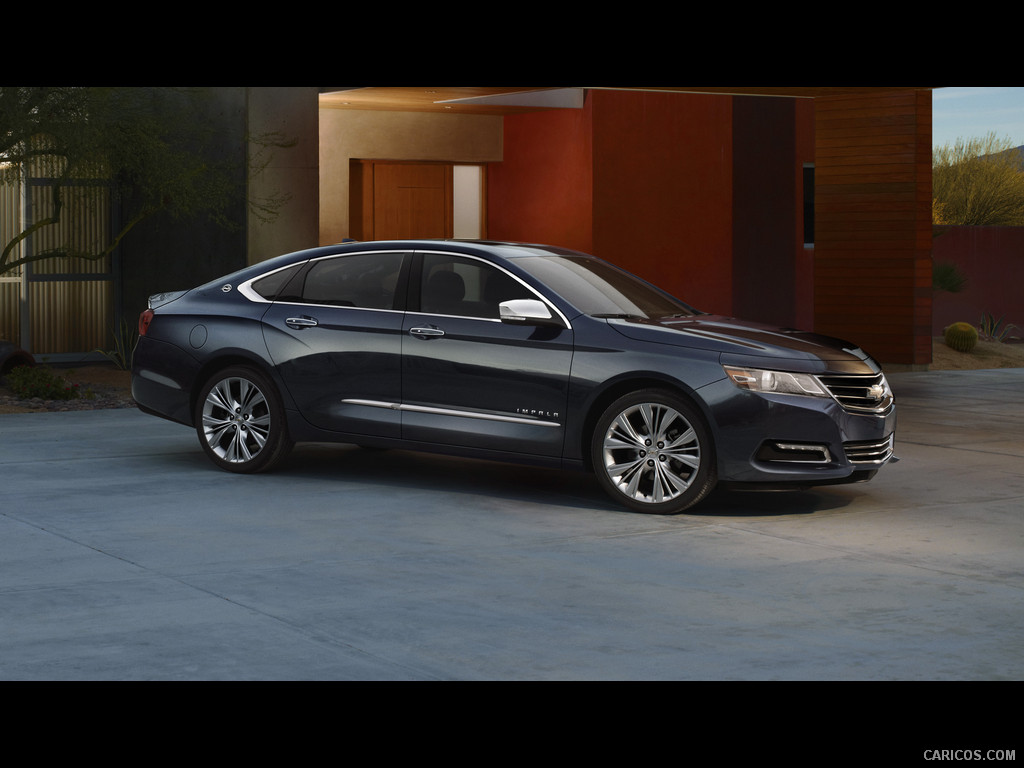
Oldest Nameplates still in production part II: Chevrolet Impala

This article is a followup to
http://boyracer.blogspot.in/2013/01/oldest-nameplates-still-in-production.html

Few models have a major hand in deifining the North American Automobile industry like the Chevrolet Impala. Identified by its triple symmetrical tail lights, the car has become a best seller for GM raking in the much needed money over the years. But unlike other nameplates still in production, this car has not had a constant run thanks to top management reshuffles and product lineup goofups.

Impala: An Impala is a medium-sized African Antelope.


First generation (1957-1958)

The Impala was manufactured in 1957 as a top of the line full-size economy cars alongwith Belair. The car had many distinguishing design features compared to other chevy's such as the tailfins at the rear and the triple symmetrical tail lights. This car was available in a 2-door convertible and 2-door hardtop version with a 3.0L I6, 4.6L v8 and a 5.7L V8 engines. The cars also had the cross flagged insignias now only found on the Corvettes. This car had a major hand in helping GM retain the no.1 spot as worlds largest car maker.


Second Generation (1958-1960)
The early years in car industry did not see a new generation car every year. But after the success of First Imapala and the feedback received by the company, the second generation came out in 1958. The car was heavily reworked and the chassis and bodywork was shared with entry level Buicks and Pontiacs. The tailfins at the tail were more pronounced but the triple taillights were given a miss but returned in the 1960 model. The second generation was basically hurried to give Impala a brand in itself instead of being sold as Belair. The 1959 car also had a distinct nostril design between the headlights and the Bonnet which was removed in the 1960 design. The cars sported a a new 3.9L I6 but retained the 4.6L v8 and 5.7L v8 engines.


Third Generation (1960-1964)

With the onset of the 70's the cars were losing their angles and becoming more boxy when it came to looks. The tailfins of the Impala were lost in the Third generation. The Tapered B-pillar design continued. A special edition Impala with bubble glass roof  (streching from Windshield to Boot) was launched. Engine options included a 3.8L I6, 4.6L V8, 5.4L V8, 6.7L V8 and a 7.0L V8.


Fourth Generation (1964-1970)

The fourth Generation Impala continued to be more subtle and simpler and more boxy.  The Impala was at the time one of the largest selling cars in the U.S. alongwith the likes of Ford Mustang. To cater to the demand, the Chevrolet Impala was made across 12 plants in the U.S. and Canada. In total, the fourth Generation Impala helped cement its place in the world as the fourth largest selling car in the world.  Ten engine options were on offer. 4.1L I6, 4.6L V8, 5.0L V8, 5.4L V8, 5.7L V8, 6.5L V8, 6.6L V8, 6.7L V8, 7.0L V8 and 7.4L V8.


Fifth Generation (1971-1976)

The sales success of the Chevrolet Impala continued through the early 70's. Various bodystyles were launched by Chevrolet to sustain sales such as a fastback version (aka Mustang), a bubbletop roof version and stations Wagons. The fifth generation Impala designs were streamlined in general and engine choices were also brought down to 5. A 4.1L I6, 5.7V8, 6.6L V8 turbo, 6.6L V8 NA, and 7.4L V8 options.


Sixth Generation (1976-1985)

The Sixth Generation marked the end of the beautiful American cars and the onset of wierd designs. The boxy muscle car designs were gone. Also gone were the big sized cars. The new Impalas were considerably smaller than previous versions thanks to the increased Japanese Invasion. Fortunately, the car still ruled as one of the largest selling cars in the North American market. While bodystyles decreased, engine options increased to 6. A 3.6L V6 replaced the old gen I6 engine along with a 4.1L V6. A diesel V8 engine was also added to the lineup.


Seventh Generation (1994-1996)

The big American Carmakers had started bowing down to the Japanese onslaught in the Automobile sector. The seventh generation Impala was smaller than before and the classic styling cues were absent too. This was also the last time the older Impala platform was used which was in continuous production since 1959. The sport tuned suspension and the black hues was a huge hit amongst the cops. Only one engine was offered, a 5.7L V8 and only a 4 door sedan bodystyle was offered. Increased competition and reliablity killed the Impala name in 1996. The triple ring tail lights was gone too.


Eighth Generation (1999-2005)

With the last of the old school Impala production ending, The fortunes at General Motors had also turned. Fighting with the Japanese onslaught, even American cars were becoming a me too design tough to distinguish in the market. Finally, a revision program brought back the Eighth Generation Impala in 1999. The Impala again provided a much needed boost in sales for GM being the largest selling cab car in the North America. The new Impala was a Front wheel drive car with only a 3.4L V6 and 3.8L V6 options available. The circular tailights and the running impala logo had returned on the car.


Ninth Generation ( 2005-2013)

In an attempt to win back marketshare and money, GM did a half hearted redesign of the Eighth Generation Impala. The ringed tail lights were lost but the running Impala logo was retained until 2008. A 3.5L V6, 3.6L V6, 3.9L V6 and a 5.3L v8 engine were offered. Also new on this car was a 6-speed automatic. Various minor refreshes continued over the 8 years trying to arrest falling sales for an outdated car with low fuel efficiency.


Tenth Generation (2013- Present)

Post Bankruptcy, GM adopted a new design philosophy. The Tenth Generation Impala received modern design cues on the lines of the 70's muscle car designs. The larger size of the sedan has been restored. Only a 4-door sedan version will be offered. Also new for the tenth generation Impala are the smaller 2.4L I4, 2.5L I4 and 3.6L V6 engines. The ringed tail lights have been deleted but the running Impala on the C-pillar has been retained.


Minggu, 15 Juli 2012

Legends of Wheels Part VI: Fallon McElligott 'The Skoda revolution'

This article is the sixth part of the 'Legends of Wheels' Series.

http://boyracer.blogspot.in/2012/04/legends-of-wheels-part-isergio.html
http://boyracer.blogspot.in/2012/04/legends-of-wheels-part-ii-carlos-ghosn.html
http://boyracer.blogspot.in/2012/04/legends-of-wheels-part-iii-lee-iacocca.html
http://boyracer.blogspot.in/2012/05/legends-of-wheels-part-iv-siddharth-lal.html
http://boyracer.blogspot.in/2012/06/legends-of-wheels-part-v-alan-mulally.html

For the sixth edition of 'Legends of Wheels' it has taken me close to a month to compile. Also, this time the issue is not about one person but an agency Fallon McElligot.


Often described as 'the laughing stock' of the automotive world until the late 90's. Skoda's reputation as a carmaker languished until Volkswagen's takeover in 1991. The jokes went something like this

"How do you double the value of a Skoda? Fill up the petrol tank!"

Why do skodas have heated rear windscreens? To keep your hands warm while you are pushing it. 

Why do Skodas have a rear wash wipe ? To remove the flies that crash into them. 

Got a wing mirror for a skoda? Okay, seems like a fair swap 

What do you call a skoda driver who say's he has a speeding ticket ? A Dreamer 

What colour shall I get my skoda in? It doesn't matter, it'll go brown through rust after a week

What do you call a Skoda at the top of a hill? A miracleWhat do you call 2 Skodas at the top of a hill? A mirage. 
Skoda's had a reputation for being unreliable in Europe when VW took over the company. The company was run by the state and quality control was almost absent. Backed by Volkswagen Group expertise and investments, the design—both style and engineering—has improved greatly. The 1994 model Felicia was effectively a reskin of the Favorit, but quality improvements helped, and in the Czech Republic the car was good value for money and became popular. As technical development progressed and attractive new models were brought to market, Škoda's image was initially slow to improve. In the UK, a major turnabout was achieved with the ironic "It is a Škoda, honest" campaign, which was started in the early 2000s.


By 2005 Skoda was selling over 30,000 cars a year in the UK, a market share of over 1%. For the first time in its UK history, a waiting list developed for deliveries by Skoda. Skoda owners in the UK have consistently ranked the brand at or near the top of the J.D. Power customer satisfaction survey since the 2000s.

In truth, Skoda has a rich history and is one of the world's oldest vehicle manufacturers, having been established in the 1890s first building bicycles, then motorcycles and finally cars. It's heyday was before WWII, then as the century evolved, with Communism in charge of what eventually became the Czech Republic, quality, engineering development and performance took a back seat to egalitarian affordability.


Sales started picking up immidiately. The reduction of state intervention and VW inputs also helped as Skoda's upped their reliability and match customer expectations. Six accolades were awarded for work carried out by Škoda’s advertising agency, Fallon, and direct marketing agency, Archibald Ingall Stretton (AIS) in 2002. The gold was awarded for the highly distinctive and popular "It’s a Škoda. Honest" campaign, which dramatically influenced people’s perception of the brand and contributed to Škoda’s rapid sales growth in the UK.y marketing the unreliable history, the company stood at high risk of damaging the little market share they had.  Fallon McElligot benefitted in that VW gave them a free hand with the brands marketing efforts. 


In an ultra-competitive industry suffering from chronic overcapacity, Skoda has proven it has what it takes to compete with the best in the business.  Because of the shortage of skilled labour that affected so many enterprises in socialist societies, Skoda employed many prisoners. They made up 90 per cent of the pressing plant, for instance. When they were freed during political amnesties in January 1990, it left a gaping hole in the factory's labour force: higher wages could not tempt them back. In one of the ironies of history, conscript soldiers were briefly ordered to fill their places but because they were less skilled, production remained far below demand and Skoda's debts, acquired in the 1980s, continued to grow.

Skoda continued selling the Favorit, an Italian-designed hatchback which had debuted in the late 1980s, but it was a stopgap move. Among the many changes were those connected to labour traditions, but there were initial problems. Though Skoda workers were sent to VW's Wolfsburg plant for training, their productivity did not immediately improve. They had adopted a very flexible, improvisatory way of working during Communism which contrasted greatly with those ways demanded by the Japanese methods employed by VW, where precise just-in-time processes were required and the foreman was the absolute boss.


It soon became clear that the methods taught in Wolfsburg would not work on the local production line. There was also irritation that the German managers, skilled only in economics, were overlooking the Czech workers' vast technical skills. "We didn't know a lot about Western advertising or marketing, but we did know how to build cars," one engineer told Pavlinek. After a year, the Germans learned to adapt to and respect Czech ways and productivity began to increase.  The number of defects fell from five per car to less than one, and production of the Favorit jumped as Skoda slowly started to move into profit. 

There was a lot of advertising in Western markets to turn Skoda's image around, admitting old flaws. For the Felicia, the first VW Skoda, the slogan was '548 changes'. The second VW Skoda production, the Octavia, was a hit.  Today Skoda Sells close to a million cars a year and the company has entered various markets worldwide. 

http://eandt.theiet.org/magazine/2009/19/evolution-of-skoda.cfm

Minggu, 03 Juni 2012

Legends of Wheels Part V: Alan Mulally

This article is part V to the following articles

http://boyracer.blogspot.in/2012/04/legends-of-wheels-part-isergio.html
http://boyracer.blogspot.in/2012/04/legends-of-wheels-part-ii-carlos-ghosn.html
http://boyracer.blogspot.in/2012/04/legends-of-wheels-part-iii-lee-iacocca.html
http://boyracer.blogspot.in/2012/05/legends-of-wheels-part-iv-siddharth-lal.html

When the Big Three from America fell due to US Dollar lending issues in 2008, The largest car company in the world termed 'too big to fail' failed. Billions of taxpayer money had to be put into GM (General Motors) to get it running again. Shareholders value was written off and 50% workforce was cut. The same was the case with Chrysler Corporation, the third largest company fresh from divorce with Daimler Benz (Mercedes-Benz) from Germany. The company too faced the same fate except Sergio Marchionne of Fiat showed interest in the company. The only company left standing was Ford Motors. This was no miracle, but smart thinking and forecasting of one man, Alan Mullaly.


Finding the Leader

In September, 2006, then-CEO of Ford Motor Company William Clay Ford Jr. took a risk. In search of his own replacement, his offers were passed up by many respected automotive leaders such as Dieter Zetsche and Carlos Ghosn, so he took the unexpected step: he hired an aeronautical engineer to lead his own company. The rest is history.

Since the last few years, the majority of news in the automotive industry has little good to print. Recalls, arbitration, dealership closings and what not. The exception has been Ford Motor Company. They seem to have cornered the market on positive automotive news with much of the credit going to the man at the top - Alan Mullaly. Ford was notorious for its caustic corporate culture. Executives put their own advancement and the success of their own departments ahead of the bottom line. The company was divided into warring fiefdoms. Different sets of data were used to make different points to different constituencies. And the automaker consistently bet big on homerun products only to let them languish after their initial success.


When Mulally was tapped as Ford CEO in the spring of 2006, reaction inside the company ranged from suspicion to outrage. What did an airplane guy know about the car business? "There were lots of raised eyebrows," recalls Bill Ford. The management team was particularly rattled, especially those who were hoping to fill the job themselves. Ford was heading for a $12.7-billion loss and on the verge of losing its No. 2 sales spot in the U.S. to Toyota because of poor management and an uninspiring vehicle lineup. Four years later, Ford reported a $6.6-billion profit — the biggest in the sector that year — and Toyota was comparing its cars with Fords, not Hondas, in its ads.

As much of the competition struggles with challenges that have followed one of the worst years in the industry's history, Ford has its eyes forward. The choices that Mulally and his team have made over the last 3 and a half years are a model for how struggling automakers and their CEOs should handle adversity and do what few in the business are expected to do today. It then is not surprising to know that various industry leaders mocked Mullaly when he joined Ford.


The beginnings

The first vehicle to see Mulally's hand was the Ford Taurus. Ford's prior designs and quality were worthy of jokes just like the GM and Chrysler. Ford's Taurus in their designers own words looked like a football. But Alan Mullaly knows the value of a brand name from his previous stint at Boeing. He asked the engineers and designers to bring back the Taurus in the coolest shape possible in a two year timeline. The company launched the famous Taurus SHO in 2009.


The early move that truly marked his understanding of business, trends, and the economy came in his first couple of months when he mortgaged all of Ford's assets for $23.6 billion. At the time it was widely criticized as desperate and he was called an alarmist when he said the money would help in both development and as “a cushion to protect for a recession or other unexpected event."
Two years later, the critics were silenced as his desperate move paid off. The 2008 recession saw the other two companies go down under bankruptcy while Ford survived without loans of any sort from the government. Ford lost $14.8 billion in 2008, the most in its 105-year history, and burned through $21.2 billion, or 61%, of its cash hoard.


 But that didn't mean Mullaly didn't plan for a bailout if necessary. The CEO's of the Big Three went to ask for loan in their private jets which met with national outcry. (http://abcnews.go.com/Blotter/WallStreet/story?id=6285739&page=1). The company quickly sold 5 of the 6 jets and the next meeting saw the CEO drive in a Hybrid to ask for a loan. Mulally made a promise both to his company and the American people. If Ford accepted a bailout, he would reduce his salary (currently at $2,000,000 a year) to $1. Luckily for him, his company, and the American people, they did not accept a bailout and are the last of the Detroit Big 3 who stands as an independent company not in bankruptcy.  Mulally protected product spending even as Ford cut thousands of staff and economized on everything else, down to paper clips and plant watering. 


What people Wanted

The decision to sell Jaguar and Land Rover to Tata Motors in 2007 was symbolic of the turmoil the company was going through as they received $2.3 billion, much lower than what was paid for the companies. Aston Martin was sold of to investors in the Middle East. Volvo was sold to an unknown Chinese company. Mercury was dealt the death blow and has been cleared from the showroom floors in 2011. But while many including me question the sale of the brands, the fact remains that such moves brought the company much needed liquid cash in the time of need.  Ford also sold Their stake in Mazda when the situation became more grave.


But the Mullaly had one goal - 'FORD' and he saved the name. The company also jumped the innovation bandwagon and turned out the most advanced models with technology such as FORD SYNC. The Mustang has been refreshed to take on the likes of Cheverolet Camaro and Dodge Challenger. The Fiesta Focus with Windows technology and Bluetooth  are some of the most advanced cars in the industry today.

Creating one Ford

It did not take Mulally long to realize that there was not just one Ford, but many. In addition to just plain Ford, there was Ford of Europe, Ford of Asia and a host of other divisions and subsidiaries. And there was little coordination, or even cooperation between its many parts. All the divisions churned out different cars leading to lack of economies of scale.


Mulally’s first priority was to weld these disparate regional divisions together into a single, global enterprise. By doing that, he was able to create previously unimaginable economies of scale and create a multinational automotive powerhouse. In an early meeting with reporters, Mulally was asked if he was interested in a merger. “Yes!” he exclaimed with a big grin as we all whipped open our notebooks. “We’re going to merge with ourselves.” Today the same Ford Fiesta and Focus models are sold in US, Europe, Australia and South America.

The Outcome

Consumer Reports this month recommended 70% of Ford's vehicles, vs. 19% of GM's and none of Chrysler's.


Mulally’s vision took Ford back to its roots. He came across an ad Henry Ford had taken out in the Saturday Evening Post in 1925. Ford’s vision: opening the highways for all mankind. Although Ford did not invent the automobile, he transformed it from a rich man’s toy to a utility for the everyman. Mulally believed that Ford had to return to its vision, democratizing technology and quality so everyone could afford a best-in-class car.

Minggu, 27 Mei 2012

Legends of wheels Part IV: Siddharth Lal

Following up on


We now have an icon from the motorcycling industry. The man who restored one of the oldest Motorcycle marques as a dominant force in the industry. The man is none other than Siddharth Lal.


History of Royal Enfield (From the Royal Enfield website)

The Enfield Cycle Company made motorcycles, bicycles, lawnmowers and stationary engines under the name Royal Enfield out of its works based at Redditch, Worcestershire. The legacy of weapons manufacture is reflected in the logo comprising the cannon, and the motto "Made like a gun". Use of the brand name Royal Enfield was licensed by the Crown in 1890. In 1909 Royal Enfield surprised the motorcycling world by introducing a small Motorcycle with a 2 ¼ HP V twin Motosacoche engine of Swiss origin.  In 1912 came the JAP 6 HP 770 CC V twin with a sidecar combination. It was this motorcycle which made Enfield a household name. 

At the time of the outbreak of WW I Royal Enfield supplied consignments of their 6 HP sidecar Outfit motorcycles with Stretchers to the Crown. This same motorcycle also came with a Vickers machine Gun sidecar attachment which could also be turned skywards and used against low flying aircraft. Royal Enfield supplied large numbers of motorcycles to the British War Department and also won a motorcycle contract for the Imperial Russian Government. 


During World War II, like other manufacturers of that time Royal Enfield was also called upon by the British authorities to develop and manufacture military motorcycles. One of the most well-known Enfields was the Royal Enfield WD/RE, known as the Flying Flea, a lightweight 125 cc motorcycle designed to be dropped by parachute with airborne troops. After the war the factory continued manufacturing the models developed during the war and the legendary J 2 model appeared which went on to be the ancestor of the legendary Bullet. The same motorcycle which perhaps had the honour of the being the one with the longest production run in the world.


Royal Enfield motorcycles were being sold in India ever since 1949. In 1955, the Indian government started looking for a suitable motorcycle for its police forces and the army for patrolling duties on the country's border. The Bullet 350 was chosen as the most suitable bike for the job. The Indian government ordered 800 of these 350 cc motorcycles, an enormous order for that time. Thus In 1955, the Redditch Company partnered with Madras Motors in India to form what was called 'Enfield India' to assemble these 350 cc Bullet motorcycle under licence in erstwhile madras (Now called Chennai). As per their agreement Madras Motors owned the majority (over 50%) of shares in the company. In 1957 tooling equipment was also sold to Enfield India so that they could manufacture components and start full-fledged production. The Enfield Bullet dominated the Indian highways and with each passing year its popularity kept rising.

Royal Enfield UK continued manufacturing motorcycles and came out with some more innovative and powerful machines notably the Royal Enfield Meteor, Constellation and finally the Interceptor 700, before being sold to Norton-Triumph-Villiers (NVT) in 1968. Production ceased in 1970 and the company was dissolved in 1971. Remaining tooling and equipment of the Redditch works were auctioned off. Meanwhile the Bullet 350 continued to be manufactured in India and by the 1980’s the motorcycles were even exported to Europe out of India. Even after the motorcycle manufacturing closed down the precision engineering division ran for some more time and even bicycles were produced until quite late.

In 1990, Enfield India entered into a strategic alliance with the Eicher Group, and later merged with it in 1994. It was during this merger that the name Enfield India changed to Royal Enfield.


The company sold 78, 546 motorcycles in the April-March 2011-12 period. This was from a plant constructed to manufacture 30,000 bikes only decades ago. 

Historian of Royal Enfield: Siddharth Lal

The year 2000 could have been decisive. That was when the board of directors at Eicher Motors decided to either shut down or sell off Royal Enfield - the company's Chennai-based motorcycle division, which manufactured the iconic Bullet motorbikes. For all its reputation, the sales of the bike was down to 2,000 units a month against the plant's installed capacity of 6,000; losses had been mounting for years. Though the bikes had diehard followers, there were also frequent complaints about them - of engine seizures, snapping of the accelerator or clutch cables, electrical failures and oil leakages. Many found them too heavy, difficult to maintain, with the gear lever inconveniently positioned and a daunting kick-start.
It is not an easy task to revive a motorcycle brand. Things  down further when we are talking of a legacy that is more than 100 years old. Such was the task at hand for the directors at Eicher who took over Royal Enfield India in 1994. The Royal Enfield Bullet is now the oldest selling motorcycle nameplate in the world and the Bullet is the motorcycle model which has withstood the longest timeline of any models in the world.


When the decision was being taken on Royal Enfield, just one person stood up to the board, insisting Royal Enfield should get another chance. He was Siddhartha Lal, a third generation member of the Delhi-based Lal family, promoters of the Eicher group of companies. Eicher Motors was set up by Vikram Lal, Siddharth’s father. Lal, then 26, was an unabashed Bullet fan: he even rode a red coloured Bullet while leading the baraat (procession) to his wedding venue, instead of the traditional horse. "The board agreed to give me a chance," says Lal. "It was not because of its confidence in me, but because the business was doing so badly it could hardly get any worse."

Retaining the bikes' rugged looks was a given, including the build, the design of the head lamp and the petrol tank. But should the gears be shifted close to the rider's left foot - as in most bikes - or retained on the right side? The question gave Lal and his team many sleepless nights, since long time users were dead opposed to the change. The engine was another thorny question. The old cast iron engine was a relic of the past. Its separate gear box and oil sump design made it prone to oil leaks and it seized up very often. Its ability to meet increasingly strict emission norms was also suspect. A modern aluminium engine would eliminate these problems, but it would lack the old engine's pronounced vibrations and beat - which Royal Enfield customers loved. Laws of physics made it impossible to replicate these with the new engine.


There are many global examples of auto companies going under following a radical change in the engine of their products. Yet Lal and his team proceeded to both alter the position of the gears and design a new engine. "We retained many of the old engine's characteristics - the long stroke, the single cylinder, the high capacity with push rod mechanism," says Ravichandran, the man who made Bajaj and TVS tick before joining Royal Enfield. But the new engine, unlike the old, had hydraulic tappets, a new engine arrangement, new metal and fewer moving parts. Obviously, it did not produce the vibrations and the beat of the old, but international experts were consulted and sound mapping carried out for over 1,000 hours to ensure it produced the maximum rhythmic vibrations possible and a beat, which was 70 per cent of the amplitude of the original.

The new engine had 30 per cent fewer parts and produced 30 per cent more power than the old, with better fuel efficiency. By 2010, all Royal Enfield models had begun to use the new engine. Two other problems needed to be addressed: the quality of some of the components Royal Enfield bikes were using, and the sales experience. To tackle the first, shop floor processes were fine tuned, while suppliers were exhorted to improve quality levels. Royal Enfield also embarked on a large scale internal exercise to tone up performance. "We declared 2006 as the year of getting back to the basics," says Ravichandran. "We also formed a field quality rapid action force to bridge the gap between customer expectations and the reality."


 Slowly, the tide turned. Engine related problems and oil leakages in Royal Enfield products almost disappeared. By 2008 dealers were reporting lower workloads. Warranty claims fell sharply too. Malfunctioning of the sprag clutch, on which the electric starter depends, declined, for instance, from five per cent in 2005/06 to 0.2 per cent in 2010/11. Royal Enfield also began conducting marquee rides to promote leisure biking. "Such steps removed the fears about our products' reliability some customers may have had," says Venki Padmanabhan, who succeeded Ravichandran as CEO earlier this year after Ravichandran was elevated to the board of Eicher Motors. To improve sales experience new company-owned showrooms were launched and dealerships expanded.

Closing the new Jaipur plant was also plant of the revival process. The company started giving motorcycles to potential buyers for an overnight test instead of the traditional 10 mins test by other motorcycles.

In October 2008, Royal Enfield launched in Germany its newly designed 500cc Classic model - inspired by J2, a 1950 model Bullet - with the new engine. It was a success, admired for its performance and fuel economy.


The Company: Today

Today, Royal Enfield's problems are of a different kind. How should it scale up without diluting brand equity? It also faces challenges from iconic global brands such as Harley-Davidson which has entered the Indian market. With other options available, will its customers continue to sit out the six-month period it takes to provide deliveries?

Driving change when the chips are down is easy: there is no other option. In Royal Enfield's case the change worked for it. But can Siddhartha Lal and his team do the same when the going is good?


But however nostalgic that may sound, Royal Enfield was in Dire straits. When Hero Honda Launched the fun killer fuel efficient CD100, it had meant corrupted a lot of middle class Indian hearts. Bikes like the Jawa 350 and Yamaha RD350 ultimately died a premature death. Engine capacities locked in at 100cc and power was limited to extract 70 kmpl. History is proof that whenever a 'Gandhi' has come to power, country has gone down the drain and Fuel prices have gone up. Royal Enfield too was affected.

Another major reason was also the fact that due to lack of innovation at the company. Even the employees were contempt in making limited motorcycles for the Indian army. Retail models lack Frugality and reliability that would shame a 100 year old waterpump. 


It wasn't till 2001 that Lal took charge, and he quickly realised that running Royal Enfield called for more than just selling a few motorcycles every year. Royal Enfield had barely survived the onslaught of the Japanese bikes, and Lal saw that nostalgia and heritage could take Bullet only that far. "Let common sense prevail, not legacy ," was the mantra that Lal wanted to ingrain as he and his team went about over hauling Royal Enfield.

Over the last seven years, changes have been effected to get out of the mental rut. "We had to experiment continuously, never mind the failures ." Traditionally, Royal Enfield bikes had the gearshift to the right, even as the world over, gearshifts had moved to left. Lal knew that if the gears were moved from the right to the left, ardent Bullet followers would feel cheated. After all, that was one of the things that set the Bullet — and by extension, them — apart from the rest. "We are defined by the right gearshift," Lal says.

But in the quest for numbers, there are some temptations that Lal and Enfield resisted.
"Small bikes and mass bikes have been avoided like plague. We are focused on the place we want," explains Lal, adding that the proposition of Royal Enfield isn't just about commuting but also for passion-biking and leisure. Even as it was consolidating Bullet's position, the company knew that the burgeoning youth segment was an opportunity it had to tap into.  RL Ravichandran, CEO, Royal Enfield Motors, says the only way youngsters could be attracted to try models like the Bullet Machismo 500, the Bullet Electra and Thunderbird was to assure them of the quality. "Features like ease of start, disc brakes, and fit-and-finish were looked into," explains Ravichandran.
 
While the payoff has been in the past three years, for Lal it began at a board meeting in 2000, when the then 27-year old Lal asked his father for two years’ time to turn Royal Enfield around. He was as good as his word: between 2000 and 2004, he made it profitable again. The icing on the cake was recreating the cult status of the legendary Royal Enfield, which we all know as the Bullet.

Eicher is setting up a new plant to make 150,000 bikes a year. He shrugs off the flattering statistic that the bike is sold in 30 countries. What he really wants is to establish a global leisure-motorcycle business over the next six-eight years. Realising that vision is going to be one hell of a ride.


Going Forward

The foundation for leisure biking was laid at Royal Enfield a little over a decade ago when Mr Lal and his team were trying to figure out what the company was all about. They looked at commuters, different sizes/categories of bikes and finally realised that there was no point competing with the (then) Indo-Japanese bikes but, instead, creating an individual space for Enfield.  

There have also been some interesting trends in the sales pattern. Earlier, the company was dependent upon semi-urban markets such as Punjab or Kerala, which dominated sales. Today, in the last six-eight years, while volumes continue to be strong in these two States, 60-80 per cent of sales come from the cities, including tier-2 metros. also, the Royal Enfield customer base is a lot more youthful today than what it has been in the recent past when middle-aged men were in the driver's seat. 

According to him, some of the recent riding initiatives such as the Himalayan rally have been huge brand-building efforts. “It gets people to really enjoy the type of motorcycling which is part of our culture. This is the starting point of our branding efforts, which is all about rides,” he says.  Now Royal Enfield Dealers nationwide hold about 10 rides every 3-4 months including short 2 hour rides to long 10 day rides. 


“We do not have sports personalities or actors to endorse our bikes. I would rather flush my head down a loo than have someone who does not know how to ride a bike pose for my motorcycle. We do not want to build our brand this way,” Mr Lal reiterates.

Thanks to its new-found popularity, the waiting time for an Enfield can now stretch up to nine months and the company recently announced it would invest Rs. 200 crore to double capacity in the next two years. Since it addressed the safety concerns of its consumers (for example, traditionally brakes were always located on the “wrong” side; starting it once required incredible patience), Lal says, there’s been an explosion in the number of 18- to 21-year-old Enfield buyers. Café Racer, the next new model, is due at the end of 2012 and new launches will follow every two-three years.

“At Rs. 500 crore revenue, it’s not a huge brand, but it’s got this whole aura which we’re trying to build on,” he says.