Tampilkan postingan dengan label Automobiles. Tampilkan semua postingan

Minggu, 10 Februari 2013

Oldest Nameplates still in production part II: Chevrolet Impala

This article is a followup to
http://boyracer.blogspot.in/2013/01/oldest-nameplates-still-in-production.html

Few models have a major hand in deifining the North American Automobile industry like the Chevrolet Impala. Identified by its triple symmetrical tail lights, the car has become a best seller for GM raking in the much needed money over the years. But unlike other nameplates still in production, this car has not had a constant run thanks to top management reshuffles and product lineup goofups.

Impala: An Impala is a medium-sized African Antelope.


First generation (1957-1958)

The Impala was manufactured in 1957 as a top of the line full-size economy cars alongwith Belair. The car had many distinguishing design features compared to other chevy's such as the tailfins at the rear and the triple symmetrical tail lights. This car was available in a 2-door convertible and 2-door hardtop version with a 3.0L I6, 4.6L v8 and a 5.7L V8 engines. The cars also had the cross flagged insignias now only found on the Corvettes. This car had a major hand in helping GM retain the no.1 spot as worlds largest car maker.


Second Generation (1958-1960)
The early years in car industry did not see a new generation car every year. But after the success of First Imapala and the feedback received by the company, the second generation came out in 1958. The car was heavily reworked and the chassis and bodywork was shared with entry level Buicks and Pontiacs. The tailfins at the tail were more pronounced but the triple taillights were given a miss but returned in the 1960 model. The second generation was basically hurried to give Impala a brand in itself instead of being sold as Belair. The 1959 car also had a distinct nostril design between the headlights and the Bonnet which was removed in the 1960 design. The cars sported a a new 3.9L I6 but retained the 4.6L v8 and 5.7L v8 engines.


Third Generation (1960-1964)

With the onset of the 70's the cars were losing their angles and becoming more boxy when it came to looks. The tailfins of the Impala were lost in the Third generation. The Tapered B-pillar design continued. A special edition Impala with bubble glass roof  (streching from Windshield to Boot) was launched. Engine options included a 3.8L I6, 4.6L V8, 5.4L V8, 6.7L V8 and a 7.0L V8.


Fourth Generation (1964-1970)

The fourth Generation Impala continued to be more subtle and simpler and more boxy.  The Impala was at the time one of the largest selling cars in the U.S. alongwith the likes of Ford Mustang. To cater to the demand, the Chevrolet Impala was made across 12 plants in the U.S. and Canada. In total, the fourth Generation Impala helped cement its place in the world as the fourth largest selling car in the world.  Ten engine options were on offer. 4.1L I6, 4.6L V8, 5.0L V8, 5.4L V8, 5.7L V8, 6.5L V8, 6.6L V8, 6.7L V8, 7.0L V8 and 7.4L V8.


Fifth Generation (1971-1976)

The sales success of the Chevrolet Impala continued through the early 70's. Various bodystyles were launched by Chevrolet to sustain sales such as a fastback version (aka Mustang), a bubbletop roof version and stations Wagons. The fifth generation Impala designs were streamlined in general and engine choices were also brought down to 5. A 4.1L I6, 5.7V8, 6.6L V8 turbo, 6.6L V8 NA, and 7.4L V8 options.


Sixth Generation (1976-1985)

The Sixth Generation marked the end of the beautiful American cars and the onset of wierd designs. The boxy muscle car designs were gone. Also gone were the big sized cars. The new Impalas were considerably smaller than previous versions thanks to the increased Japanese Invasion. Fortunately, the car still ruled as one of the largest selling cars in the North American market. While bodystyles decreased, engine options increased to 6. A 3.6L V6 replaced the old gen I6 engine along with a 4.1L V6. A diesel V8 engine was also added to the lineup.


Seventh Generation (1994-1996)

The big American Carmakers had started bowing down to the Japanese onslaught in the Automobile sector. The seventh generation Impala was smaller than before and the classic styling cues were absent too. This was also the last time the older Impala platform was used which was in continuous production since 1959. The sport tuned suspension and the black hues was a huge hit amongst the cops. Only one engine was offered, a 5.7L V8 and only a 4 door sedan bodystyle was offered. Increased competition and reliablity killed the Impala name in 1996. The triple ring tail lights was gone too.


Eighth Generation (1999-2005)

With the last of the old school Impala production ending, The fortunes at General Motors had also turned. Fighting with the Japanese onslaught, even American cars were becoming a me too design tough to distinguish in the market. Finally, a revision program brought back the Eighth Generation Impala in 1999. The Impala again provided a much needed boost in sales for GM being the largest selling cab car in the North America. The new Impala was a Front wheel drive car with only a 3.4L V6 and 3.8L V6 options available. The circular tailights and the running impala logo had returned on the car.


Ninth Generation ( 2005-2013)

In an attempt to win back marketshare and money, GM did a half hearted redesign of the Eighth Generation Impala. The ringed tail lights were lost but the running Impala logo was retained until 2008. A 3.5L V6, 3.6L V6, 3.9L V6 and a 5.3L v8 engine were offered. Also new on this car was a 6-speed automatic. Various minor refreshes continued over the 8 years trying to arrest falling sales for an outdated car with low fuel efficiency.


Tenth Generation (2013- Present)

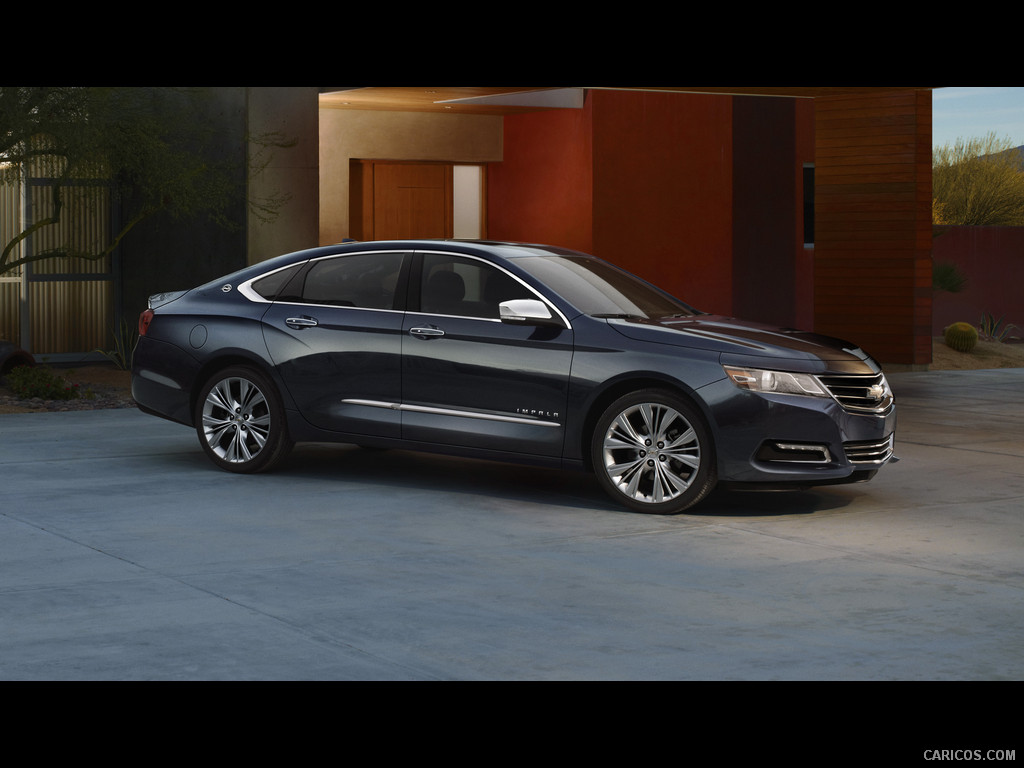
Post Bankruptcy, GM adopted a new design philosophy. The Tenth Generation Impala received modern design cues on the lines of the 70's muscle car designs. The larger size of the sedan has been restored. Only a 4-door sedan version will be offered. Also new for the tenth generation Impala are the smaller 2.4L I4, 2.5L I4 and 3.6L V6 engines. The ringed tail lights have been deleted but the running Impala on the C-pillar has been retained.


Minggu, 27 Januari 2013

Oldest Nameplates still in production part I : Rolls Royce Phantom

Using a good selling name plate has been a used and used again formula by marketers world over. Not only in the automobile industry but also other segments. When a product is successful using the same name to cross sell or upsell is the usual mantra. It should not come as a surprise then if some of the oldest name plates still in production in the world are more than 80 years old. One such name plate is the Rolls Royce Phantom.


Phantom I  (1925-1931)

Every Phantom today is hand-built at the Home of Rolls-Royce at Goodwood in England. From seamstresses to surface finish technicians and French polishers, it takes 60 pairs of hands to design, craft and construct a Rolls-Royce before it's ready for its owner. Now if the same process made all the Rolls Royce phantom, the history dates back to 1925. The year when the Phantom I was manufactured. When the time came to replace the premium car Rolls Royce Silver Ghost, Rolls Royce came up with Phantom I. The manufacturer from Manchester gave the Phantom I a bigger engine and overhead valves. Being the second 40/50 hp model Rolls Royce had to differentiate the two models from old Silver Ghost and hence the Phantom I was born . The 7668cc engines came with either 3 or 4 speed gearboxes based on either they were sold in the US or the UK. Also while the fuel guage on UK models was on the tank, the US cars had it on the dash.


Phantom II (1929-1936)

The last of the 40/50 hp models from Rolls Royce, the Phantom II is undoubtedly the best looking car in the lineup ever made. The new chassis had shorter wheelbase and stiffer springs for better overall ride and handling performance. The same 7668 Inline 6-cylinder engine did duty on this car as the previous version. A shorter wheelbase but tuned Phantom Continental was also built. The iconic shape has also landed the car in films such as 'The sorcerer's apprentice' where it is the sorcere's (Nicholas Cage) car and ' Indiana Jones and the last crusade'.


Phantom III ( 1936-1939)

The last version of the Rolls Royce built before the resources were dedicated to the war.  The car had the only V12 engine in any Rolls Royce until Rolls Royce put in another v12 in 1998. Although car chassis production was stopped in 1939, the last car was made in 1947. A total of 727 cars were manufactured, many of which survive to this day.


Phantom IV (1950-1956)

The fourth generation of Phantom is notable for two major reasons. Firstly, it was the first Rolls Royce Phantom to be built after the World War II where most of the company resources were diverted. Secondly, very few cars were made and only for the rich and elite. Only 18 cars were produced over a span of 6 years which brings the number to 3 cars per year. Surprisingly, 16 of these cars have survived. The fact is ironic considering Rolls Royce had initially intended to discontinue the Phantom line after the world war II. The car had an inline 8 cylinder engine with a 5700 cubit capacity.


Phantom V

516 units of the Phantom V were built from 1959 to 1963. The car had a 6230cc V8 engine. The gearbox for the car was borrowed from General Motors. The heaviest of all the phantoms, very few examples of this car exist. The most famous of the Phantom V's was owned by the John Lennon of the Beatles fame.


Phantom VI

374 units of the Phantom VI were built between  1968 and 1990. The sixth generation was also in production for the longest time of all phantoms totalling 21 years. Two engines were installed on this car, A 6.2 litre v8 and a 6.75 litre v8.More Phantom VI were also built as late as 1995 till 1997 for the sultan of Brunei. THis was the last car manufactured before the BMW era of Rolls Royce began.


Phantom VII

The first Phantom built under BMW ownership was the Phantom VII. The car is still in production from 2003.  The BMW era Phantom is also the first Phantom to not have a 4 speed gearbox but a hi-tech 6 speed automatic and 8 speed zf sourced automatic boxes. The engine is a 6.75 litre v12. The car is available in 44000 paint shades. Also it is ithe only car in the world to provide a power reserve indicator akin to an Automatic watch. A record 1000+ phantom Vii units were sold in 2007. A 2013 version has been launched by Rolls Royce as Series II with major updates.


Minggu, 26 Agustus 2012

10 best movie chase scenes

1. Gone in sixty seconds: Starring : Nicholas Cage, Anjelina Jolie,
Car: Silver 1967 Shelby GT500.

No movie chase list is complete without the one from Gone on Sixty seconds. Briliant acting, Brilliant driving and brillian direction. Nicholas Cage racing against time to save his brother is all it takes for the Mustang robbery and the whole of city police department including helicopters chasing Memphis. Must watch.


2. Bullit: Starring: Steve Mcqueen,
Cars: Ford Mustang GT390 Fastback 1968 Dodge Charger R/T

Firstly, this movie was shot in 1968, Secondly It features legendary superstar Steve Mcqueen, Thirdly, it is one of the few movies for which Ford produced a limited edition Mustang (2008 Mustang Bullitt edition in green), fourthly, none of the other chase scenes in hollywood history has such a natural burnout.


3. Ronin: Starring: Robert De Niro, Jean Reno, Natascha McElhone
Cars:

Ronin had the most successful car chase scene of the 20th century. Also this is one of the rarest car chase scenes where a Peugeot 406 humbles a BMW M5.  Also one of the most destructive car chase scenes, it features Natascha McElhone doing some excellent driving in the opposite lane.


4. Tokyo Drift (Fast and the Furious series) : Starring:  Lucas Black, Sung Kang, Nathalie Kelly.
Cars: Veilside RX-7, Mitsubishi EVO IX, Nissan 350Z

The movie that made car drifting a household name. Also Nathalie kelley's only superhit movie. But the scene stealer is Han driving his RX7 to perfection. Rewind........ play.


5. Taxi: Actors Starring: Samy Naceri
Cars :Peugeot 406, Mercedes-Benz 500E

When the French make a movie, they make sure the germans are beat by French cars. Here's another scene where A couple of Benz are beat by the hero in a Peugeot. You can find the same in the Ronin video above.


6. The Dark Knight and The Dark Knight Rises: Starring Christian Bale, Aaron Eckhart, Heath Ledger
Cars and Bikes: Batpod

The batpod is a modern take of the bat motorcycle by Christopher Nolan designed by Nathan Crowley who also designed the Tumbler (batcar) for the same movie franchise. Wish it were entered into commercial production.


7. The transporter : Starring Jason Statham, Natalya Rudakova
Cars: Audi S8(A8) W12, Mercedes-Benz E-Class

None of the Transporter Movies can be singled out here beginning from the opening scene of first transporter where he transports a trio of thugs and their loot to the end of the third installment. European cars, Open highways and dictated stunts lead to interesting car chases as this one.


8. Terminator 2: Starring Arnold Schwarzenegger, Robert Patrick, Edward Furlong
Cars and Bikes:  Harley Davidson Softail Fatboy

Teenagers still try to imitate the way Arnold reloads the gun while driving the Harley. Not to mention the awesome jump Arnold makes on  his motorbike. A genuine T800 vs. T1000 showdown.

Embedding for this video not available. Please follow the link.

http://www.youtube.com/watch?v=LPaTKBH_Sxk

9. The Matrix Reloaded: Starring: Carrie Ann Moss
Cars and Bikes: Ducati 996

Many would argues that The matrix Scene shouldn't be included here since it is pure CGI. But we've got to hand it to the Wachowski brothers for the nailbiting scene executed with minute attention to detail.


10. James Bond: Quantum of Solace Starring: Daniel Craig
Aston Martin DBS V12, Alfa Romeo 159,

Daniel Craig brings to the 007 franchise a rawness that makes him suit the role of a secret agent compared to previous bonds which looked like models walking the ramp. Also raw is this opening scene of the second part of Quantum of Solace where an Aston Martin driven by Bond is escaping the bandits in Alfa Romeos.

Minggu, 15 Juli 2012

Legends of Wheels Part VI: Fallon McElligott 'The Skoda revolution'

This article is the sixth part of the 'Legends of Wheels' Series.

http://boyracer.blogspot.in/2012/04/legends-of-wheels-part-isergio.html
http://boyracer.blogspot.in/2012/04/legends-of-wheels-part-ii-carlos-ghosn.html
http://boyracer.blogspot.in/2012/04/legends-of-wheels-part-iii-lee-iacocca.html
http://boyracer.blogspot.in/2012/05/legends-of-wheels-part-iv-siddharth-lal.html
http://boyracer.blogspot.in/2012/06/legends-of-wheels-part-v-alan-mulally.html

For the sixth edition of 'Legends of Wheels' it has taken me close to a month to compile. Also, this time the issue is not about one person but an agency Fallon McElligot.


Often described as 'the laughing stock' of the automotive world until the late 90's. Skoda's reputation as a carmaker languished until Volkswagen's takeover in 1991. The jokes went something like this

"How do you double the value of a Skoda? Fill up the petrol tank!"

Why do skodas have heated rear windscreens? To keep your hands warm while you are pushing it. 

Why do Skodas have a rear wash wipe ? To remove the flies that crash into them. 

Got a wing mirror for a skoda? Okay, seems like a fair swap 

What do you call a skoda driver who say's he has a speeding ticket ? A Dreamer 

What colour shall I get my skoda in? It doesn't matter, it'll go brown through rust after a week

What do you call a Skoda at the top of a hill? A miracleWhat do you call 2 Skodas at the top of a hill? A mirage. 
Skoda's had a reputation for being unreliable in Europe when VW took over the company. The company was run by the state and quality control was almost absent. Backed by Volkswagen Group expertise and investments, the design—both style and engineering—has improved greatly. The 1994 model Felicia was effectively a reskin of the Favorit, but quality improvements helped, and in the Czech Republic the car was good value for money and became popular. As technical development progressed and attractive new models were brought to market, Škoda's image was initially slow to improve. In the UK, a major turnabout was achieved with the ironic "It is a Škoda, honest" campaign, which was started in the early 2000s.


By 2005 Skoda was selling over 30,000 cars a year in the UK, a market share of over 1%. For the first time in its UK history, a waiting list developed for deliveries by Skoda. Skoda owners in the UK have consistently ranked the brand at or near the top of the J.D. Power customer satisfaction survey since the 2000s.

In truth, Skoda has a rich history and is one of the world's oldest vehicle manufacturers, having been established in the 1890s first building bicycles, then motorcycles and finally cars. It's heyday was before WWII, then as the century evolved, with Communism in charge of what eventually became the Czech Republic, quality, engineering development and performance took a back seat to egalitarian affordability.


Sales started picking up immidiately. The reduction of state intervention and VW inputs also helped as Skoda's upped their reliability and match customer expectations. Six accolades were awarded for work carried out by Škoda’s advertising agency, Fallon, and direct marketing agency, Archibald Ingall Stretton (AIS) in 2002. The gold was awarded for the highly distinctive and popular "It’s a Škoda. Honest" campaign, which dramatically influenced people’s perception of the brand and contributed to Škoda’s rapid sales growth in the UK.y marketing the unreliable history, the company stood at high risk of damaging the little market share they had.  Fallon McElligot benefitted in that VW gave them a free hand with the brands marketing efforts. 


In an ultra-competitive industry suffering from chronic overcapacity, Skoda has proven it has what it takes to compete with the best in the business.  Because of the shortage of skilled labour that affected so many enterprises in socialist societies, Skoda employed many prisoners. They made up 90 per cent of the pressing plant, for instance. When they were freed during political amnesties in January 1990, it left a gaping hole in the factory's labour force: higher wages could not tempt them back. In one of the ironies of history, conscript soldiers were briefly ordered to fill their places but because they were less skilled, production remained far below demand and Skoda's debts, acquired in the 1980s, continued to grow.

Skoda continued selling the Favorit, an Italian-designed hatchback which had debuted in the late 1980s, but it was a stopgap move. Among the many changes were those connected to labour traditions, but there were initial problems. Though Skoda workers were sent to VW's Wolfsburg plant for training, their productivity did not immediately improve. They had adopted a very flexible, improvisatory way of working during Communism which contrasted greatly with those ways demanded by the Japanese methods employed by VW, where precise just-in-time processes were required and the foreman was the absolute boss.


It soon became clear that the methods taught in Wolfsburg would not work on the local production line. There was also irritation that the German managers, skilled only in economics, were overlooking the Czech workers' vast technical skills. "We didn't know a lot about Western advertising or marketing, but we did know how to build cars," one engineer told Pavlinek. After a year, the Germans learned to adapt to and respect Czech ways and productivity began to increase.  The number of defects fell from five per car to less than one, and production of the Favorit jumped as Skoda slowly started to move into profit. 

There was a lot of advertising in Western markets to turn Skoda's image around, admitting old flaws. For the Felicia, the first VW Skoda, the slogan was '548 changes'. The second VW Skoda production, the Octavia, was a hit.  Today Skoda Sells close to a million cars a year and the company has entered various markets worldwide. 

http://eandt.theiet.org/magazine/2009/19/evolution-of-skoda.cfm

Minggu, 03 Juni 2012

Legends of Wheels Part V: Alan Mulally

This article is part V to the following articles

http://boyracer.blogspot.in/2012/04/legends-of-wheels-part-isergio.html
http://boyracer.blogspot.in/2012/04/legends-of-wheels-part-ii-carlos-ghosn.html
http://boyracer.blogspot.in/2012/04/legends-of-wheels-part-iii-lee-iacocca.html
http://boyracer.blogspot.in/2012/05/legends-of-wheels-part-iv-siddharth-lal.html

When the Big Three from America fell due to US Dollar lending issues in 2008, The largest car company in the world termed 'too big to fail' failed. Billions of taxpayer money had to be put into GM (General Motors) to get it running again. Shareholders value was written off and 50% workforce was cut. The same was the case with Chrysler Corporation, the third largest company fresh from divorce with Daimler Benz (Mercedes-Benz) from Germany. The company too faced the same fate except Sergio Marchionne of Fiat showed interest in the company. The only company left standing was Ford Motors. This was no miracle, but smart thinking and forecasting of one man, Alan Mullaly.


Finding the Leader

In September, 2006, then-CEO of Ford Motor Company William Clay Ford Jr. took a risk. In search of his own replacement, his offers were passed up by many respected automotive leaders such as Dieter Zetsche and Carlos Ghosn, so he took the unexpected step: he hired an aeronautical engineer to lead his own company. The rest is history.

Since the last few years, the majority of news in the automotive industry has little good to print. Recalls, arbitration, dealership closings and what not. The exception has been Ford Motor Company. They seem to have cornered the market on positive automotive news with much of the credit going to the man at the top - Alan Mullaly. Ford was notorious for its caustic corporate culture. Executives put their own advancement and the success of their own departments ahead of the bottom line. The company was divided into warring fiefdoms. Different sets of data were used to make different points to different constituencies. And the automaker consistently bet big on homerun products only to let them languish after their initial success.


When Mulally was tapped as Ford CEO in the spring of 2006, reaction inside the company ranged from suspicion to outrage. What did an airplane guy know about the car business? "There were lots of raised eyebrows," recalls Bill Ford. The management team was particularly rattled, especially those who were hoping to fill the job themselves. Ford was heading for a $12.7-billion loss and on the verge of losing its No. 2 sales spot in the U.S. to Toyota because of poor management and an uninspiring vehicle lineup. Four years later, Ford reported a $6.6-billion profit — the biggest in the sector that year — and Toyota was comparing its cars with Fords, not Hondas, in its ads.

As much of the competition struggles with challenges that have followed one of the worst years in the industry's history, Ford has its eyes forward. The choices that Mulally and his team have made over the last 3 and a half years are a model for how struggling automakers and their CEOs should handle adversity and do what few in the business are expected to do today. It then is not surprising to know that various industry leaders mocked Mullaly when he joined Ford.


The beginnings

The first vehicle to see Mulally's hand was the Ford Taurus. Ford's prior designs and quality were worthy of jokes just like the GM and Chrysler. Ford's Taurus in their designers own words looked like a football. But Alan Mullaly knows the value of a brand name from his previous stint at Boeing. He asked the engineers and designers to bring back the Taurus in the coolest shape possible in a two year timeline. The company launched the famous Taurus SHO in 2009.


The early move that truly marked his understanding of business, trends, and the economy came in his first couple of months when he mortgaged all of Ford's assets for $23.6 billion. At the time it was widely criticized as desperate and he was called an alarmist when he said the money would help in both development and as “a cushion to protect for a recession or other unexpected event."
Two years later, the critics were silenced as his desperate move paid off. The 2008 recession saw the other two companies go down under bankruptcy while Ford survived without loans of any sort from the government. Ford lost $14.8 billion in 2008, the most in its 105-year history, and burned through $21.2 billion, or 61%, of its cash hoard.


 But that didn't mean Mullaly didn't plan for a bailout if necessary. The CEO's of the Big Three went to ask for loan in their private jets which met with national outcry. (http://abcnews.go.com/Blotter/WallStreet/story?id=6285739&page=1). The company quickly sold 5 of the 6 jets and the next meeting saw the CEO drive in a Hybrid to ask for a loan. Mulally made a promise both to his company and the American people. If Ford accepted a bailout, he would reduce his salary (currently at $2,000,000 a year) to $1. Luckily for him, his company, and the American people, they did not accept a bailout and are the last of the Detroit Big 3 who stands as an independent company not in bankruptcy.  Mulally protected product spending even as Ford cut thousands of staff and economized on everything else, down to paper clips and plant watering. 


What people Wanted

The decision to sell Jaguar and Land Rover to Tata Motors in 2007 was symbolic of the turmoil the company was going through as they received $2.3 billion, much lower than what was paid for the companies. Aston Martin was sold of to investors in the Middle East. Volvo was sold to an unknown Chinese company. Mercury was dealt the death blow and has been cleared from the showroom floors in 2011. But while many including me question the sale of the brands, the fact remains that such moves brought the company much needed liquid cash in the time of need.  Ford also sold Their stake in Mazda when the situation became more grave.


But the Mullaly had one goal - 'FORD' and he saved the name. The company also jumped the innovation bandwagon and turned out the most advanced models with technology such as FORD SYNC. The Mustang has been refreshed to take on the likes of Cheverolet Camaro and Dodge Challenger. The Fiesta Focus with Windows technology and Bluetooth  are some of the most advanced cars in the industry today.

Creating one Ford

It did not take Mulally long to realize that there was not just one Ford, but many. In addition to just plain Ford, there was Ford of Europe, Ford of Asia and a host of other divisions and subsidiaries. And there was little coordination, or even cooperation between its many parts. All the divisions churned out different cars leading to lack of economies of scale.


Mulally’s first priority was to weld these disparate regional divisions together into a single, global enterprise. By doing that, he was able to create previously unimaginable economies of scale and create a multinational automotive powerhouse. In an early meeting with reporters, Mulally was asked if he was interested in a merger. “Yes!” he exclaimed with a big grin as we all whipped open our notebooks. “We’re going to merge with ourselves.” Today the same Ford Fiesta and Focus models are sold in US, Europe, Australia and South America.

The Outcome

Consumer Reports this month recommended 70% of Ford's vehicles, vs. 19% of GM's and none of Chrysler's.


Mulally’s vision took Ford back to its roots. He came across an ad Henry Ford had taken out in the Saturday Evening Post in 1925. Ford’s vision: opening the highways for all mankind. Although Ford did not invent the automobile, he transformed it from a rich man’s toy to a utility for the everyman. Mulally believed that Ford had to return to its vision, democratizing technology and quality so everyone could afford a best-in-class car.